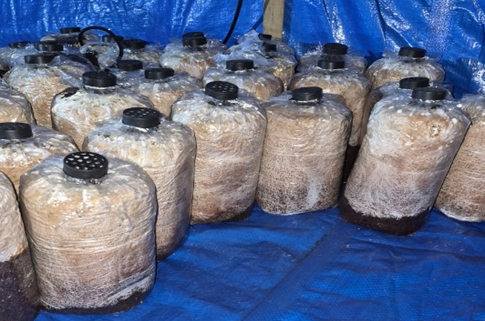
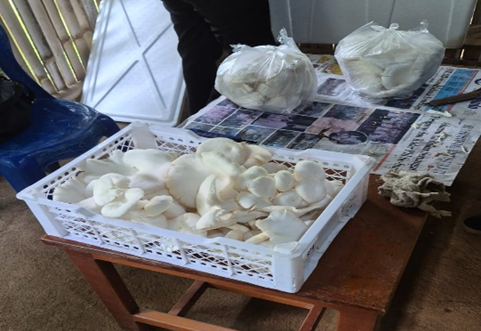
NORTH SULAWESI, 13 February 2026 – In a strategic move to cut post-harvest losses and improve product quality, a specialized research team conducted a high-level intervention visit to a local mushroom cultivation facility today. The visit, hosted at the farm of Mr. John Havelaar, focused on the critical window between harvest and market delivery for Oyster Mushrooms (Pleurotus ostreatus).
Bridging the Gap: From Farm to Table
For mushroom farmers, the journey from the kumbung (traditional cultivation house) to the consumer’s plate is a race against time. Because mushrooms are highly perishable, the research team utilized this visit to evaluate the efficacy of experimental packaging treatments.
These trials are designed to address three primary challenges in the mushroom supply chain:
- Extending Shelf Life: Keeping the produce fresh for longer periods.
- Reducing Moisture Loss: Preventing the “wilting” effect that occurs in traditional storage.
- Ensuring Quality: Maintaining the physical integrity and visual appeal of the Oyster mushrooms under specific local micro-climate conditions.
A Data-Driven Partnership
The intervention highlights a successful collaboration between academic research and practical farming. By monitoring growth rates and the physical state of the mushrooms post-packaging, the team is gathering invaluable real-world data.
Mr. John Havelaar has been a key partner in this process, actively adopting these scientific interventions at the farm level. His participation demonstrates how simple, evidence-based changes in post-harvest handling can significantly optimize yields and increase the market value of local produce.
Expanding the Research Horizon
While the current focus is on perfecting the Oyster mushroom supply chain, the research team is already looking toward the future. Development trials are currently underway for two other high-potential varieties:
- Shiitake Mushrooms: Known for their high market value and culinary demand.
- Ear Mushrooms (Jamur Kuping): A staple in regional cuisine with significant potential for wider market integration.
The ongoing research aims to create a blueprint for mushroom cultivation in the region, ensuring that farmers are equipped with the technical solutions needed to thrive in a competitive market.