Manado, North Sulawesi — An innovative collaboration between the University of Sam Ratulangi (UNSRAT) and the Australian Centre for International Agricultural Research (ACIAR) is opening new opportunities for small-scale farmers to connect directly with Indonesia’s growing tourism sector.
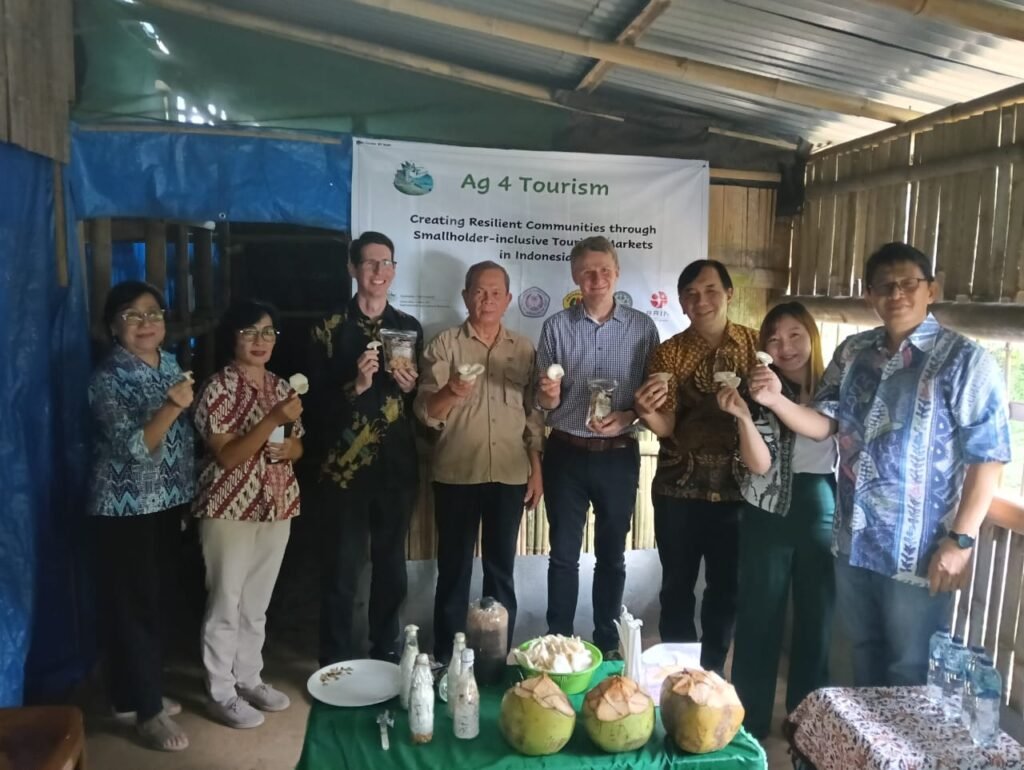
A recent field visit took place at Mr. John Havelaar’s mushroom farm, one of the leading local producers of oyster mushrooms. The visit was attended by the Ambassador, the Dean of the Faculty of Agriculture, research team members, and intervention partners from the hotel and restaurant industries.
Building Connections Between Farmers and Tourism
In her welcoming remarks, Tati Djarkasi, lecturer at UNSRAT’s Department of Agricultural Technology and team leader of the ACIAR project in North Sulawesi, explained that the project, titled “Building Resilient Communities through Inclusive Tourism Markets for Smallholder Farmers in Indonesia,” will run for five years, starting in late 2023.
The initiative is a collaborative effort between the University of Adelaide (Australia) and several Indonesian partners:
- University of Sam Ratulangi (North Sulawesi)
- University of Udayana (Bali)
- University of Mataram (West Nusa Tenggara)
- National Research and Innovation Agency (BRIN)
Through participatory research and collaborative partnerships, the project aims to strengthen the relationship between smallholder farmers and tourism businesses such as hotels and restaurants — creating shared value and sustainable growth for both sectors.
Focus on Local Mushrooms for Hotels and Restaurants
In North Sulawesi, the ACIAR project focuses on developing fresh broccoli and mushrooms as pilot models for participatory agricultural research.
Other focus commodities include lettuce and potatoes in Bali, and water spinach, pineapple, and free-range chickens in Lombok.
Interestingly, the tourism industry in Indonesia still relies heavily on imported canned or dried mushrooms, even though there is a growing demand for fresh local varieties. This project seeks to improve the local mushroom value chain, focusing on oyster, ear, and shiitake mushrooms — helping local farmers compete more effectively in the hospitality market.

Visiting the Mushroom Farm: Stories of Resilience
The visit also introduced key figures involved in the ACIAR project in North Sulawesi:
- Ir. Dedie Tooy, MS., PhD, Dean of the Faculty of Agriculture, UNSRAT
- Maria Fransisca Sumual, UNSRAT research team member
- George Kountul, MSc., M.Eng, intervention partner from the restaurant sector
- Youlanda Rondonuwu, SS, intervention partner from the hotel sector
- John Havelaar, mushroom farmer and main project partner
Mr. Havelaar has been cultivating oyster mushrooms since 2012. While many farmers were forced to stop production during the Covid-19 pandemic, he successfully revived his business in 2022. Today, he manages the entire process — from cultivation to distribution — supplying hotels, restaurants, and retail stores across Manado.
During the visit, participants observed a demonstration of mushroom seed preparation, took a tour of the mushroom growing facility, and joined an open discussion on challenges and opportunities in the local mushroom sector. The event concluded with a group photo session, symbolizing the spirit of collaboration and shared commitment.
Toward a Sustainable and Inclusive Agricultural Future
Through this initiative, UNSRAT and ACIAR aim to build a more inclusive agricultural ecosystem — one that empowers smallholder farmers to play an active role in the tourism value chain.
The partnership between universities, research institutions, and industry demonstrates a concrete step toward strengthening food security, community empowerment, and the long-term sustainability of agriculture in Eastern Indonesia.